
Why Geothermal System Design Matters
Geothermal heating and cooling is a long-term investment. A system that's properly designed will run efficiently, maintain comfortable temperatures year-round, and last for decades with minimal maintenance. A system that's undersized, oversized, or poorly matched to the property will struggle — higher energy bills, uneven comfort, and premature wear are common results of shortcuts taken at the design stage.
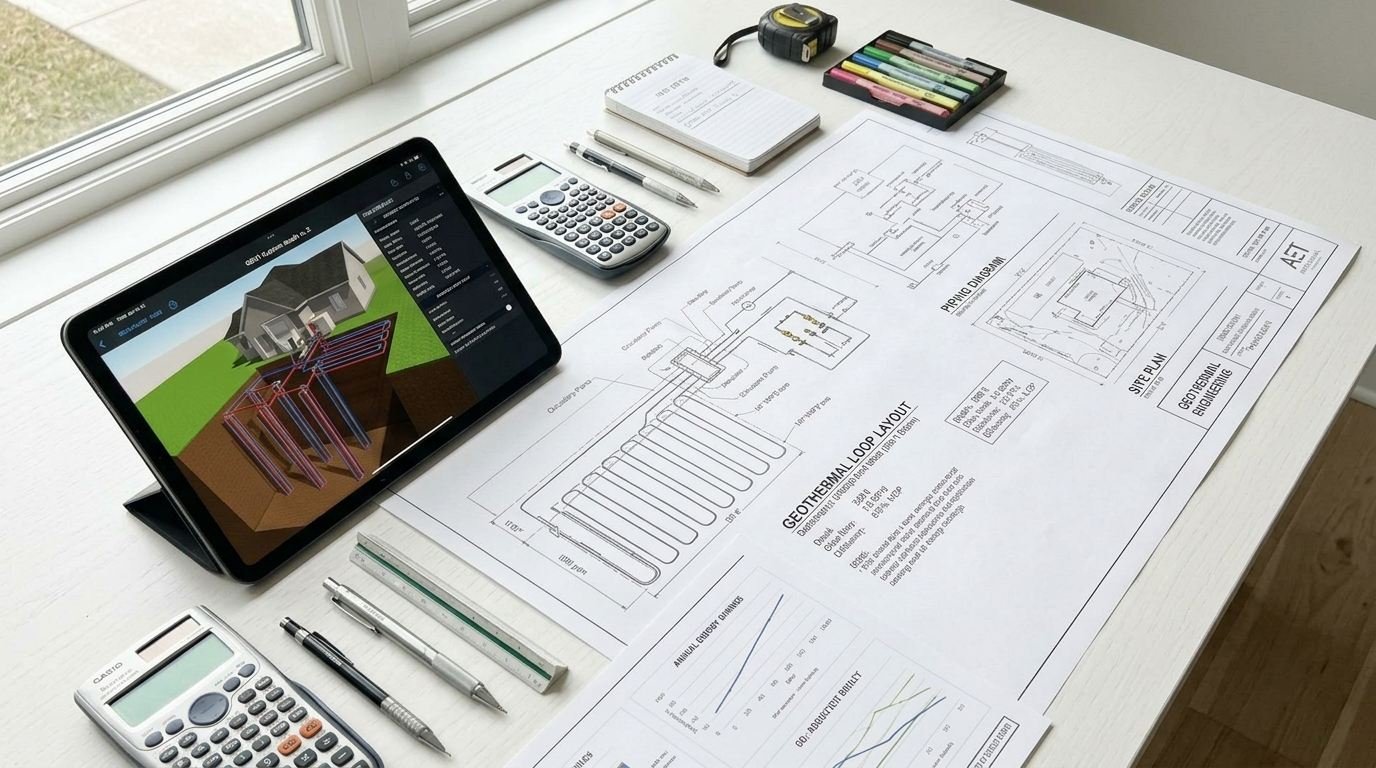
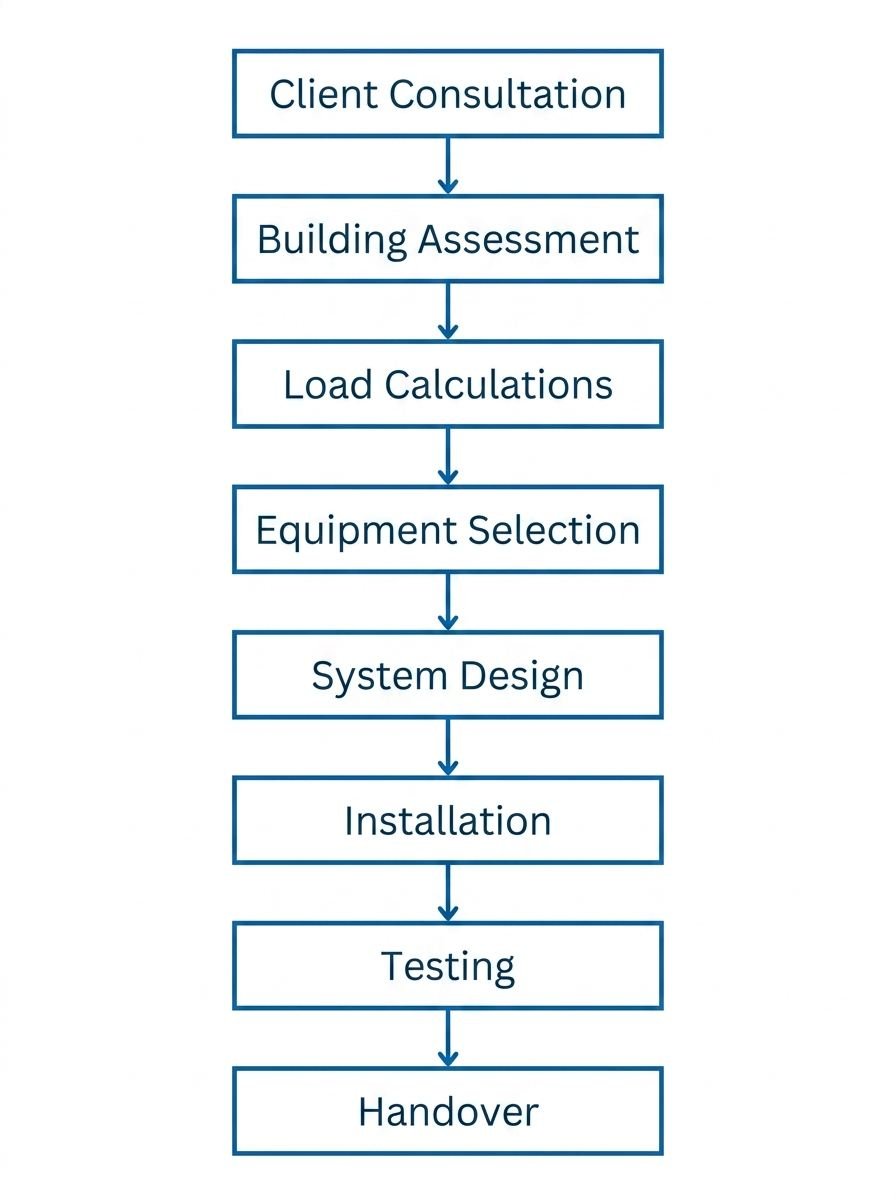
At Calgary Geothermal, system design isn't an afterthought. It's the foundation of everything we install. Before any drilling or equipment is ordered, we assess your property, calculate your building's heating and cooling load, and determine the exact system configuration needed. This work takes time and expertise — and it's why our systems perform the way they do. We don't skip it.
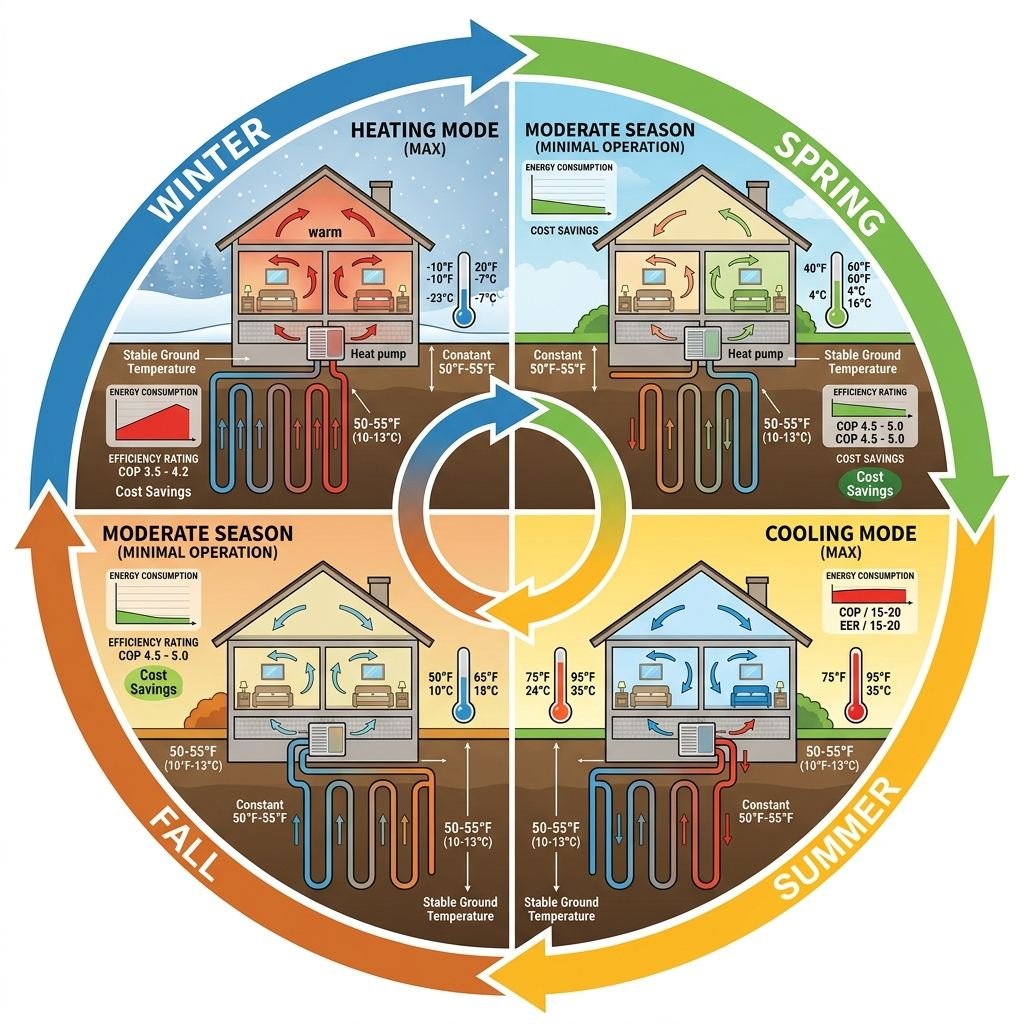
Calgary's climate demands accuracy. With winter temperatures that can drop below -30°C, a geothermal system that is not designed for local conditions will not deliver the performance you expect. We account for Alberta soil conditions, local ground temperatures, and seasonal energy demand in every design we produce.
What Goes Into a Geothermal System Design
A complete geothermal system design covers several interconnected factors. Each one affects the others — loop sizing affects equipment selection, which affects distribution compatibility, which affects overall efficiency. We assess all of them together rather than in isolation.
Heating & Cooling Load Calculation
The starting point for any geothermal design is understanding how much heating and cooling energy your building actually needs. We perform a full load calculation based on the home or building's square footage, insulation levels, window area, ceiling heights, air leakage, and orientation. This calculation tells us exactly how large the system needs to be — not a rough estimate, but a precise figure that drives every other design decision.
Oversizing a geothermal system is a common mistake in the industry. An oversized heat pump short-cycles — turning on and off too frequently — which reduces efficiency, increases wear, and can cause humidity problems. Getting the load calculation right prevents this from happening.
Site Evaluation & Soil Assessment
Ground conditions in the Calgary region vary significantly depending on the location. Soil thermal conductivity — how well the ground transfers heat — directly affects loop field performance. We evaluate the soil and geology at each site to determine the appropriate loop length and configuration. A site with poor soil conductivity requires more loop footage than a site with dense, moisture-retaining soil.
- Soil type and thermal conductivity assessment
- Groundwater depth and presence
- Available lot area and topography
- Proximity to property lines, utilities, and structures
- Seasonal frost depth and subsurface temperature profile
Loop Field Sizing & Configuration
Once we know the building's load and the site's ground conditions, we calculate the required loop field length. This determines how many boreholes are needed for a vertical system, how many trenches for a horizontal system, or how much pipe for a pond loop. Under-sizing the loop field is one of the most common — and most costly — mistakes in geothermal installation. A loop that is too small will cause the system to lose efficiency over time as ground temperatures around the loop are depleted.
We use industry-standard design software to model loop performance across Calgary's full seasonal range, ensuring the loop is properly sized for both peak winter heating demand and summer cooling.
Heat Pump Equipment Selection
With load and loop data in hand, we select the heat pump unit that best matches the system requirements. Equipment selection involves matching the unit's capacity to the calculated load, confirming compatibility with the loop configuration, and selecting a model suited to the distribution system in the building. We work with proven, high-efficiency geothermal heat pump manufacturers and do not recommend equipment based on what is easiest to source — we recommend what is right for your system.
Distribution System Compatibility
A geothermal heat pump delivers its energy to the building through a distribution system — typically forced air (ductwork), in-floor radiant heating, or a combination of both. The design must account for how heat will be delivered throughout the space. In-floor radiant systems, for example, operate at lower water temperatures than traditional boilers, which actually improves geothermal efficiency. Forced-air systems need properly sized duct work to avoid comfort and efficiency problems.
For retrofits or replacement projects, we assess the existing distribution system and flag any compatibility issues before the project begins — not after installation.
New build vs. retrofit: System design for a new construction project is more flexible — loop configuration, distribution type, and equipment can all be optimized from the start. Retrofits require careful evaluation of the existing mechanical system to confirm compatibility and identify any upgrades needed. We handle both, and we are upfront about what each project requires.
Design Deliverables
When we complete a system design, we provide a clear, documented plan for the project. This isn't a verbal estimate — it's a design package that covers every major component of the system and the reasoning behind each decision.
| Design Element | What It Covers |
|---|---|
| Load Calculation | Heating and cooling demand in BTU/h, based on the building's actual characteristics |
| Loop Field Design | Configuration type, total loop length, borehole count or trench layout, pipe sizing |
| Equipment Specification | Heat pump model, capacity, COP rating, and compatibility notes |
| Distribution Review | Duct or radiant system assessment and any recommended modifications |
| Site Plan | Borehole or trench layout relative to the property, setbacks, and utility locations |
| Permit Documentation | Supporting documents for drilling or excavation permit applications |
Common Design Mistakes We Prevent
Not every contractor takes the time to do geothermal design properly. We regularly see the results of poor design work — systems that underperform, equipment that fails early, or loop fields that cause the heat pump to work harder than it should. Here are the most common issues we prevent by doing the design work correctly:
- Undersized loop fields — cause ground temperature depletion and loss of efficiency over time
- Oversized heat pumps — lead to short-cycling, humidity problems, and increased wear
- Mismatched distribution systems — result in uneven comfort and reduced heat pump efficiency
- Inadequate site assessment — poor soil data leads to incorrect loop sizing and performance shortfalls
- Ignored building envelope — failing to account for insulation and air sealing overstates the load and overbuilds the system
Frequently Asked Questions
A complete system design typically takes 1 to 2 weeks from initial site visit to final design package. This includes the site evaluation, load calculation, loop sizing, and equipment selection. More complex commercial projects or sites with unusual ground conditions may take longer. We'll give you a clear timeline at the start of the process.
For a straight heat pump replacement where the existing loop is being reused, the original design data is reviewed and confirmed rather than fully redone — particularly if the building's use or envelope has not changed significantly. However, if the building has been renovated, expanded, or if loop performance has degraded, a fresh design assessment is warranted. We assess each replacement project individually and let you know what is needed.
Yes. Many geothermal heat pumps include a desuperheater — a heat recovery device that uses waste heat from the refrigeration cycle to pre-heat domestic hot water. This can significantly reduce hot water heating costs, particularly during the heating season when the system is running most. We account for hot water load in the system design when this feature is included.
Yes. In-floor radiant systems operate at lower supply water temperatures (typically 30–45°C) compared to forced-air systems. Lower supply temperatures actually improve heat pump efficiency (COP), so the equipment selection and loop sizing can be optimized differently for radiant systems. For forced-air systems, we also review duct sizing and static pressure to ensure the air handler is properly matched. Distribution type is an important input to the design process, not an afterthought.