Geothermal Installation Benefits & Best Practices
Geothermal installation offers a reliable and energy-efficient way to heat and cool homes by tapping into the earth's stable underground temperature. We specialize exclusively in geothermal systems, ensuring expert design, precise installation, and long-term service tailored to Calgary's local conditions. This focus allows us to create systems that perform efficiently and last for decades.
Our approach begins with a detailed evaluation of your property, soil, and energy needs to design a system that maximizes savings and comfort. We handle everything from accurate loop field installation to navigating available rebates and incentives, making the entire process clear and manageable.
How Geothermal Systems Work
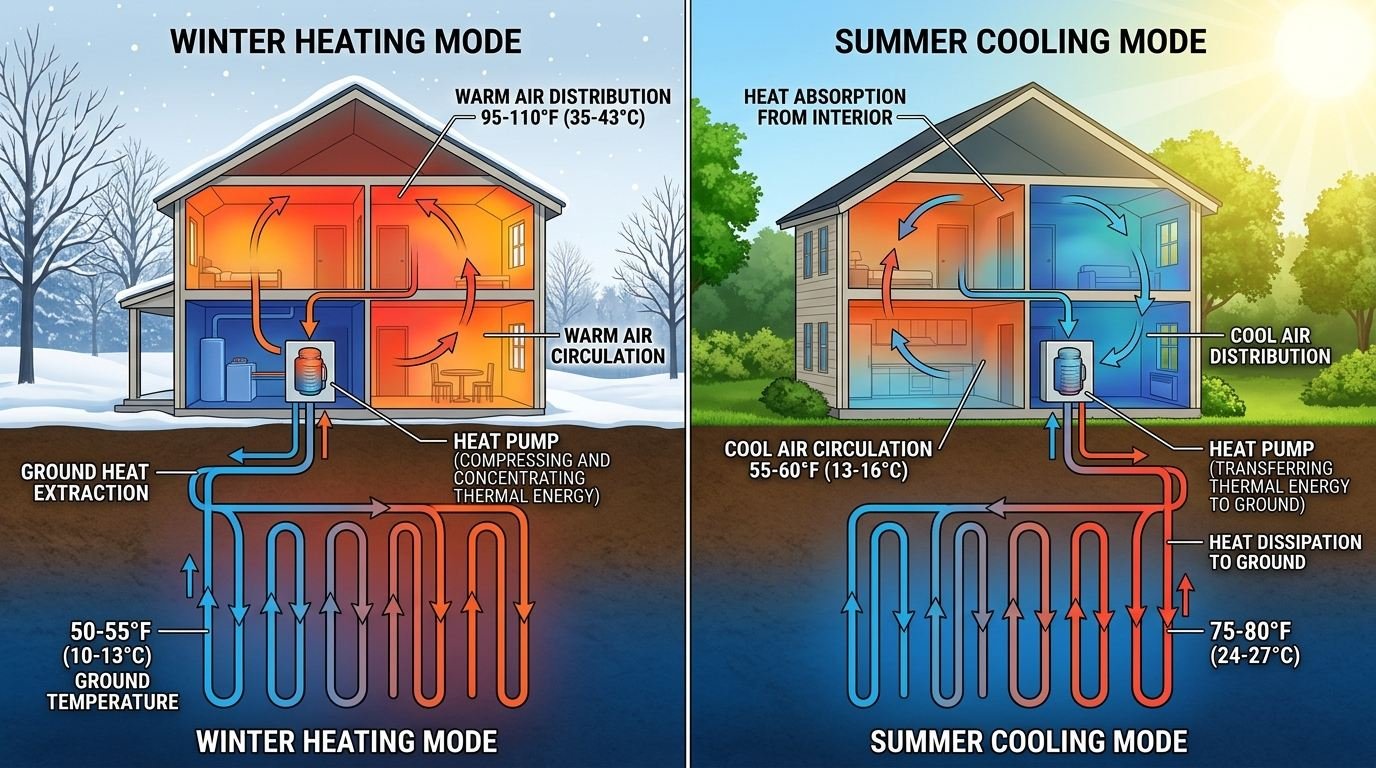
Geothermal systems harness the earth's stable temperature for heating and cooling. They transfer heat rather than generate it — which dramatically reduces energy use and lowers environmental impact. No combustion. No fuel price risk.
The Role of Ground Source Heat Pumps
At the core of every residential geothermal system is a ground source heat pump. These pumps circulate a fluid through underground loops that absorb or dissipate heat depending on the season. Unlike traditional HVAC units, they transfer heat from the ground, which maintains a nearly constant temperature year-round.
Ground source heat pumps operate silently and require minimal maintenance. They heat in winter by extracting heat from the earth, and cool in summer by reversing the process — delivering stable indoor temperatures efficiently, regardless of outdoor conditions.
Efficiency Ratings
Our geothermal systems commonly achieve around 400% efficiency — producing four units of heat for every unit of electrical energy consumed. This high efficiency significantly reduces heating and cooling costs over the life of the system.
- 300–500% Coefficient of Performance (COP) vs. 95–98% for high-efficiency gas furnaces
- Save up to 50% on annual heating costs compared to conventional systems
- Reduced reliance on natural gas and protection from volatile fuel prices
- Lower monthly utility bills throughout Calgary's October–April heating season
Advantages for Calgary's Climate
Calgary experiences temperatures ranging from -30°C in winter to +30°C in summer. Geothermal systems excel here because they draw from the earth's stable subsurface temperature — unaffected by extreme air temperatures. This means consistent performance during Calgary's coldest months, unlike air-source alternatives.
Did you know? Below the frost line in Calgary — typically 1.5–2 metres down — the ground maintains a relatively constant temperature of 4°C to 10°C year-round. That stability is the foundation of geothermal efficiency.
Custom Geothermal Design for Calgary Homes
No two properties are identical, which is why we never use a one-size-fits-all approach. We assess each site individually before any work begins. Our evaluation covers:
- Soil and ground conditions specific to the Calgary region
- Home size and layout to calculate accurate heating and cooling loads
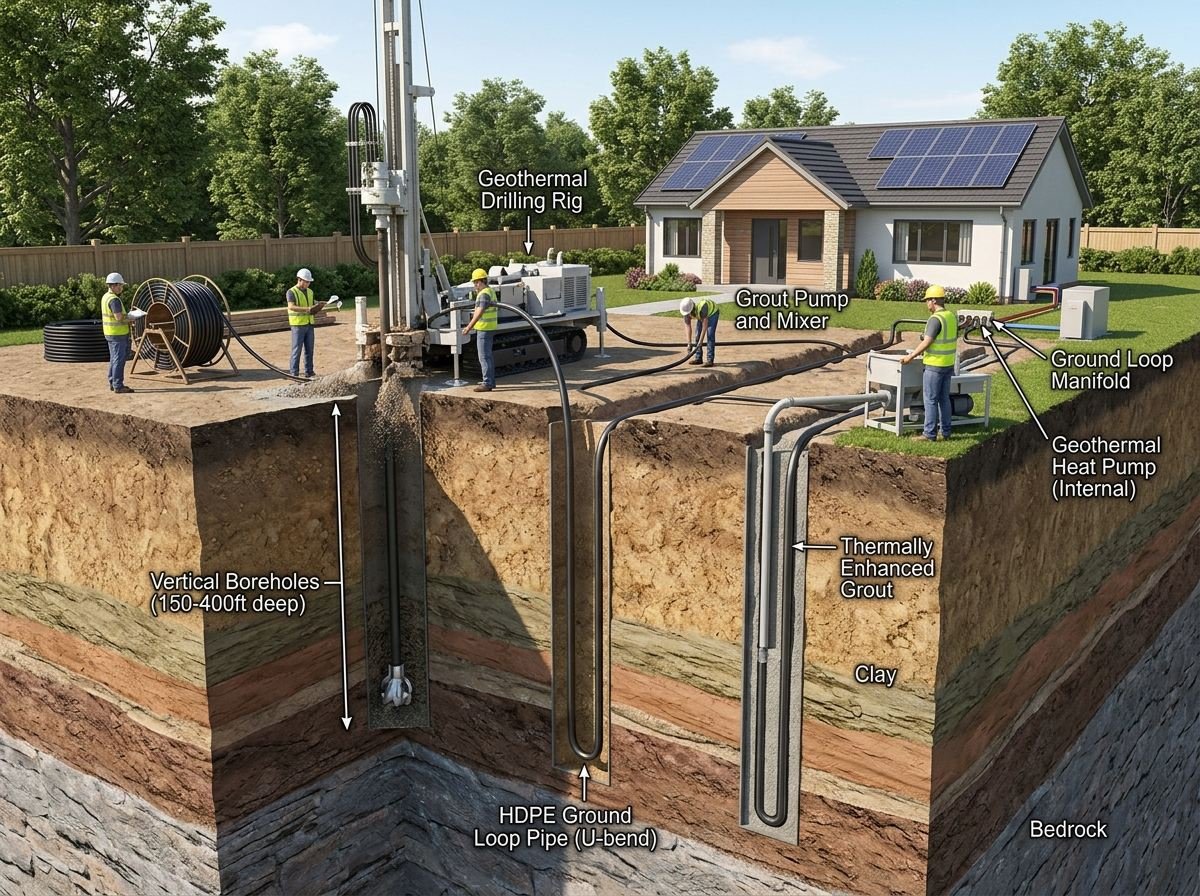
- Loop field type — horizontal, vertical, or pond/lake configurations
- Energy consumption patterns of the household
- Available land area for loop installation
This data drives every design decision. The result is a geothermal system sized and configured to perform efficiently for decades.
Ground Loop Configurations
| Loop Type | How It Works | Best For |
|---|---|---|
| Horizontal Closed-Loop | Pipes buried in shallow trenches | Properties with adequate land area |
| Vertical Closed-Loop | Pipes drilled 150–400 ft deep | Smaller lots or limited surface space |
| Open-Loop | Uses groundwater directly | Sites with reliable aquifer access |
| Pond/Lake Loop | Submerged coils in a water body | Properties near a suitable water source |
Vertical closed-loop systems are the most common choice in Calgary due to lot size constraints and consistent soil temperatures at depth.
Installation Process & Timeline
| Phase | Typical Duration |
|---|---|
| Site assessment and system design | 1–2 weeks |
| Permit acquisition | 1–3 weeks |
| Loop field excavation or drilling | 2–5 days |
| Loop fusion, pressure testing, and backfill | 1–2 days |
| Heat pump installation and mechanical connection | 2–3 days |
| System startup and commissioning | 1 day |
Every loop is pressure-tested before backfill to confirm integrity. Commissioning includes performance verification to ensure the system is operating within design parameters.
System Longevity
- Ground loop: 50+ years with virtually no maintenance required
- Heat pump unit: 20–25 years with annual servicing
- Distribution system (ducts/radiant): 30+ years
Frequently Asked Questions
Installation costs typically range from $20,000 to $35,000, depending on home size, soil conditions, and system complexity. This includes loop installation, heat pump equipment, and labour. Available government rebates and grants can significantly reduce the net cost.
The full process typically takes 4 to 8 weeks from initial site assessment through to final commissioning. This includes design, permitting, loop installation, and startup. We manage every phase in-house to keep the project on schedule.
City permits for drilling or excavation are mandatory in Calgary. Inspections ensure compliance with local codes and environmental regulations. We handle all permitting and regulatory requirements as part of our full-service installation process — you don't have to manage this yourself.
Annual system inspections and filter changes are recommended. The underground loop field generally requires no maintenance once properly installed. Annual servicing focuses on the mechanical components — refrigerant levels, filters, and electrical connections. Regular service extends system life and maintains efficiency.